

The Natchez Crape Myrtle is a prized, fast-growing, and majestic specimen known for its continuous, snow-white blooms and striking dark cinnamon bark. As an heirloom variety, it offers tremendous landscape potential, serving as a vibrant focal point, a dramatic driveway lining, or a substantial privacy screen. To achieve the mature, spectacular growth this variety is known for, however, proper planning and diligent care are essential. This guide outlines the necessary steps, from initial planting to long-term maintenance, ensuring your Natchez Crape Myrtle thrives and maximizes its aesthetic appeal.
Environmental Requirements: Zone, Sun, and Soil
Successful establishment begins with matching the tree’s needs to your specific environment. The Natchez Crape Myrtle is adaptable, but specific conditions enhance its performance and increase its drought tolerance once mature.
Sunlight and Hardiness Zones
To ensure optimal blooming and rapid growth, the plant requires full sunlight, meaning a minimum of six hours of direct sun daily. While it can tolerate some partial shade, consistent sunshine is key. Culturally, this variety is robust, suitable for growing in USDA zones 6 through 10. However, be aware of local climate risks: while generally hardy, planting should avoid areas where temperatures consistently exceed 85 degrees Fahrenheit, as this can hinder proper development.
Soil Composition and pH Nuances
The Crape Myrtle is generally adaptable to various soil types, which simplifies planting in most landscapes. Nonetheless, consistency in drainage is non-negotiable; the soil must be consistently well-draining to prevent root rot. While the tree is resilient, an ideal soil pH range slightly acidic, specifically between 5.0 and 6.5. Minor fluctuations toward alkalinity are manageable, but prioritizing good drainage and maintaining the ideal pH will support the most robust growth.
Establishing and Ongoing Maintenance Care
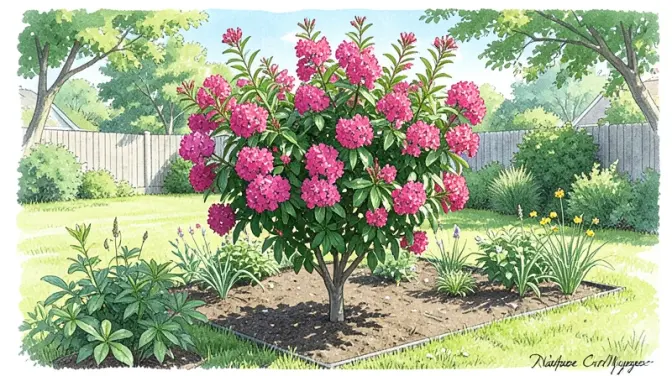
Once the Natchez Crape Myrtle is in the ground, a defined maintenance routine is required. Care needs change drastically from the establishment phase (the first year) to the mature phase.
Establishing the Planting Site
During planting, several steps are crucial for preventing early failure. First, ensure the tree is planted at the correct depth; planting too deep or too shallow will impede growth. Second, the base of the tree requires initial protection. Apply a 2-3 inch layer of mulch, such as pine straw or pine bark, around the perimeter of the trunk. It is critical that this mulch application maintains a clear distance from the trunk itself; piling mulch against the trunk traps moisture, which can encourage disease and pest infestation.
Watering and Nutrient Management
Watering protocols must be strictly managed, particularly during the critical initial establishment period.
Watering protocols must be strictly managed based on the tree’s life stage. During the initial establishment phase (first three months), deep watering is recommended about twice per week to rapidly develop a strong root system. Once established, the Crape Myrtle exhibits high drought tolerance, reducing frequency to roughly once per week during dry spells, though consistent deep watering must be maintained.
Fertilization should be scheduled for early spring and at the time of planting. A balanced, slow-release formula is the recommended approach, providing steady nutrition without the risk of rapid nutrient burn.
Pruning and Pest Control
Unlike some fast-growing trees that require rigorous shearing, the Crape Myrtle generally does not require consistent pruning. However, to maintain optimal structure and health, branches should be trimmed during the dormancy period to remove any wood that is clearly dead, dying, or excessively crowded. The primary pest to monitor is aphids; these pests can be managed naturally using horticultural oil or neem oil treatments.
Understanding Growth Limits and Warranty Conditions
Optimal health requires diligent care and adherence to specific environmental conditions. Understanding the boundaries of these requirements and the terms of the product guarantee is essential for ensuring long-term success.
Environmental and Structural Limits
While the Natchez Crape Myrtle is a powerful landscape feature, its ultimate dimensions can reach approximately 30 feet in height and 20 feet in width. Because it is a non-invasive species, root damage to surrounding structures is not an expected risk, but proper planting spacing should still account for its considerable mature size. Furthermore, its health is tied to its environment: the established growth pattern relies on the consistent availability of sunlight and adequate drainage.
Guidelines for Guarantee Claims
Should issues arise, the product guarantee provides a safety net, but claims are conditional. The primary guarantee ensures that the trees arrive in good, healthy condition, with replacement offered free of charge if they do not. The growth guarantee is valid for six months post-shipment, provided all care requirements are met. Claims can be initiated by contacting the provider, and may require supporting images or documentation.
A critical caveat to these guarantees is the planting location. The warranties are specifically void if the trees are planted outside of the recommended horticulture zones or if the specified planting and care requirements (such as adequate watering and protection from animal damage) are not strictly followed.
Summary of Success: Key Care Priorities and Risk Mitigation

Successfully growing the Natchez Crape Myrtle hinges on transitioning smoothly from establishment to maturity. The most common failure points involve neglecting the initial high-intensity watering schedule or planting the tree in poorly draining soil. To maximize the success of this large, beautiful specimen, focus on these three priorities:
- Root Establishment: Dedicate the first three months to deep, consistent watering to ensure the root system develops a strong foundation for future drought tolerance.
- Drainage and Soil Prep: Prioritize soil that is consistently well-draining, even if it means amending native soil. Ensure mulch is applied correctly—around the tree, never against the trunk.
- Environmental Adherence: Never plant the tree in an environment that persistently exceeds the temperature limits or outside of its suitable growth zones, as this overrides the plant’s natural hardiness and voids protective guarantees.
By adhering to these precise standards for planting, hydration, and environmental care, you ensure your Natchez Crape Myrtle achieves its majestic, continuous blooming potential, offering a vibrant and long-lasting landscape feature. }, }, }, }]}
\
Frequently Asked Questions
How much sunlight does the Natchez Crape Myrtle require?
The plant requires full sunlight for optimal blooming and rapid growth, which means a minimum of six hours of direct sun daily.
What are the ideal soil conditions for the Crape Myrtle?
The Crape Myrtle needs consistently well-draining soil to prevent root rot. Ideally, the soil pH should be slightly acidic, between 5.0 and 6.5.
What is the recommended watering schedule?
During the initial establishment phase (first three months), deep watering is recommended about twice per week. Once established, watering frequency reduces to roughly once per week during dry spells.
Should I prune the Natchez Crape Myrtle regularly?
The Crape Myrtle generally does not require consistent pruning. However, branches should be trimmed during the dormancy period to remove any wood that is clearly dead, dying, or excessively crowded.
Related Articles