
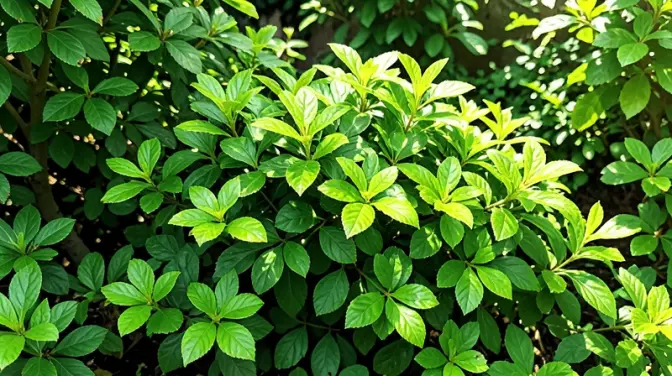
Red Tip Photinia (Photinia x fraseri) is a fast-growing, highly versatile evergreen known for its impressive visual impact. Its defining characteristic—the seasonal flush of brilliant red new growth—allows it to establish quickly into a dense, vibrant screen or a formally shaped hedge. Unlike many evergreens that maintain a steady color, the photinia offers a dramatic transition, moving from deep bronze-red tips to mature glossy green foliage. Successfully growing this shrub requires more than just planting it; it demands strategic care, particularly regarding airflow and structural pruning to achieve the polished, dense lines it is prized for.
This guide provides actionable strategies—from light requirements to strategic pruning—to maximize the photinia’s dense growth, optimize its brilliant color, and successfully mitigate common fungal risks.
Site Selection: Optimizing for Color and Structure
Before planting, selecting the correct site is crucial, as light intensity directly impacts the vibrancy of the red tips. The photinia thrives best in full sun, which significantly enhances the intensity and duration of the seasonal red coloring. While it can tolerate partial shade, doing so will likely limit the intensity of the foliage and overall aesthetic appeal.
Beyond light, the shrub has specific soil requirements. It must be planted in loamy, well-drained soil. If the soil tends to be acidic, adjusting it toward an alkaline pH is recommended for optimal growth. Good drainage is non-negotiable; standing water will rapidly compromise the plant’s health. Established photinia plants, once their root systems are mature, develop drought tolerance, though consistent moisture is needed during the initial establishment year.
Shaping the Hedge: Achieving Density and Maintaining Health
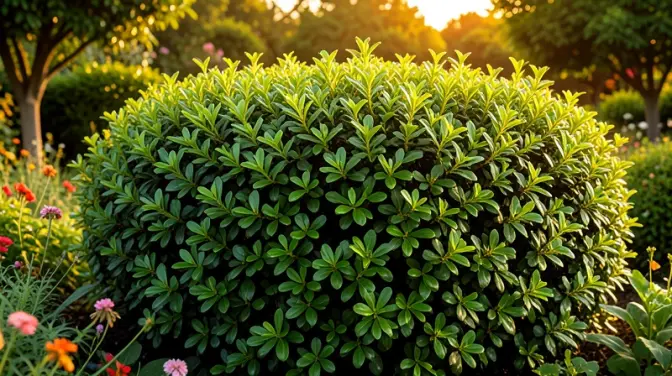
The reputation of the photinia as a dense hedge is due to consistent and intentional shaping. Pruning is not merely about controlling size; it is a proactive measure to manage light penetration, maintain density, and, most critically, improve airflow.
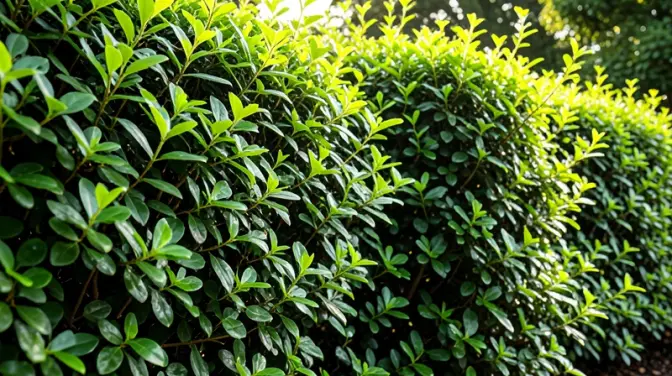
For hedges, follow a precise pruning technique: when shaping, maintain a slightly narrower crown (the upper canopy) compared to the base. This ensures that the internal foliage receives adequate light, promoting dense, uniform growth throughout the plant, rather than having a heavily shaded interior. Annual pruning, typically performed in the winter, allows for thinning out older growth and preparing the shrub for the next flush of new red shoots.
If you plan to train the photinia into a specimen tree rather than a hedge, select a strong central leader and selectively prune out competing or lateral shoots. This promotes the desired vertical structure while still allowing the shrub to produce clusters of small, white or cream-colored spring flowers.
Preventing Disease and Optimizing Airflow
Because the red tip photinia is a broadleaf evergreen, its dense foliage makes it susceptible to fungal diseases, most notably leaf spot (E. maculatum). Disease pressure increases dramatically in humid conditions and when air circulation is poor.
Airflow is the most vital defense against disease. Never pack the shrub against walls or other dense plants. Strategic pruning is the primary tool for creating necessary gaps within the canopy, ensuring air moves freely and significantly reducing the risk of fungal infections. If your environment is consistently humid, prioritize providing the hedge with maximum space to breathe.
Nutrient Management and Growing Considerations
Given its vigorous growth, heavy fertilization is rarely required in fertile, well-drained soil. However, if soil quality is poor, apply a slow-release organic fertilizer in the spring. This will support rapid vegetative growth and encourage the development of strong, vibrant red new tips.
Regarding its life cycle and propagation, the photinia is a hybrid and cannot reliably come true from seed. If you wish to propagate, stem cuttings are the required method. It is worth noting that specific cultivars, such as Red Robin or Little Red Robin, offer differences in size and compactness, allowing you to select the best fit for your desired hedge height and footprint.
Decision Checklist: Before Planting Red Tip Photinia
Before committing to this plant, evaluate your specific environment against these practical criteria. The photinia offers stunning visual results, but its success is contingent upon meeting specific environmental needs:
- Sun Exposure: Is the planting area in full sun? This is critical for maximizing the vibrancy of the signature red color.
- Soil Drainage: Is the soil structure loamy and does it drain rapidly? If water pools, the plant will struggle.
- Maintenance Commitment: Are you prepared for annual, strategic pruning to maintain a narrow crown and ensure crucial airflow?
- Regional Risk: Are you aware of local invasive species regulations? In certain regions, aggressive growth can lead to classification as invasive, requiring careful management.
By prioritizing sun exposure, managing soil drainage, and committing to strategic, airflow-focused pruning, you can ensure your red tip photinia establishes as a dense, vibrant, and long-lasting landscape feature. }, }, }, }]}
\
Frequently Asked Questions
What conditions are necessary for Red Tip Photinia to achieve vibrant red color?
The photinia thrives best in full sun, which significantly enhances the intensity and duration of the seasonal red coloring. It also requires loamy, well-drained soil.
How should I prune Photinia to ensure it remains dense and healthy?
When shaping the hedge, maintain a slightly narrower crown compared to the base. Annual pruning, typically in winter, helps thin older growth and promotes dense, uniform growth throughout the plant.
What is the most important factor in preventing fungal diseases in Photinia?
Airflow is the most vital defense against disease, particularly leaf spot. Strategic pruning is the primary tool for creating necessary gaps within the canopy, ensuring air moves freely.
Can Photinia be planted in partial shade?
While photinia can tolerate partial shade, doing so will likely limit the intensity of the foliage and overall aesthetic appeal, as it prefers full sun for optimal color vibrancy.
Related Articles